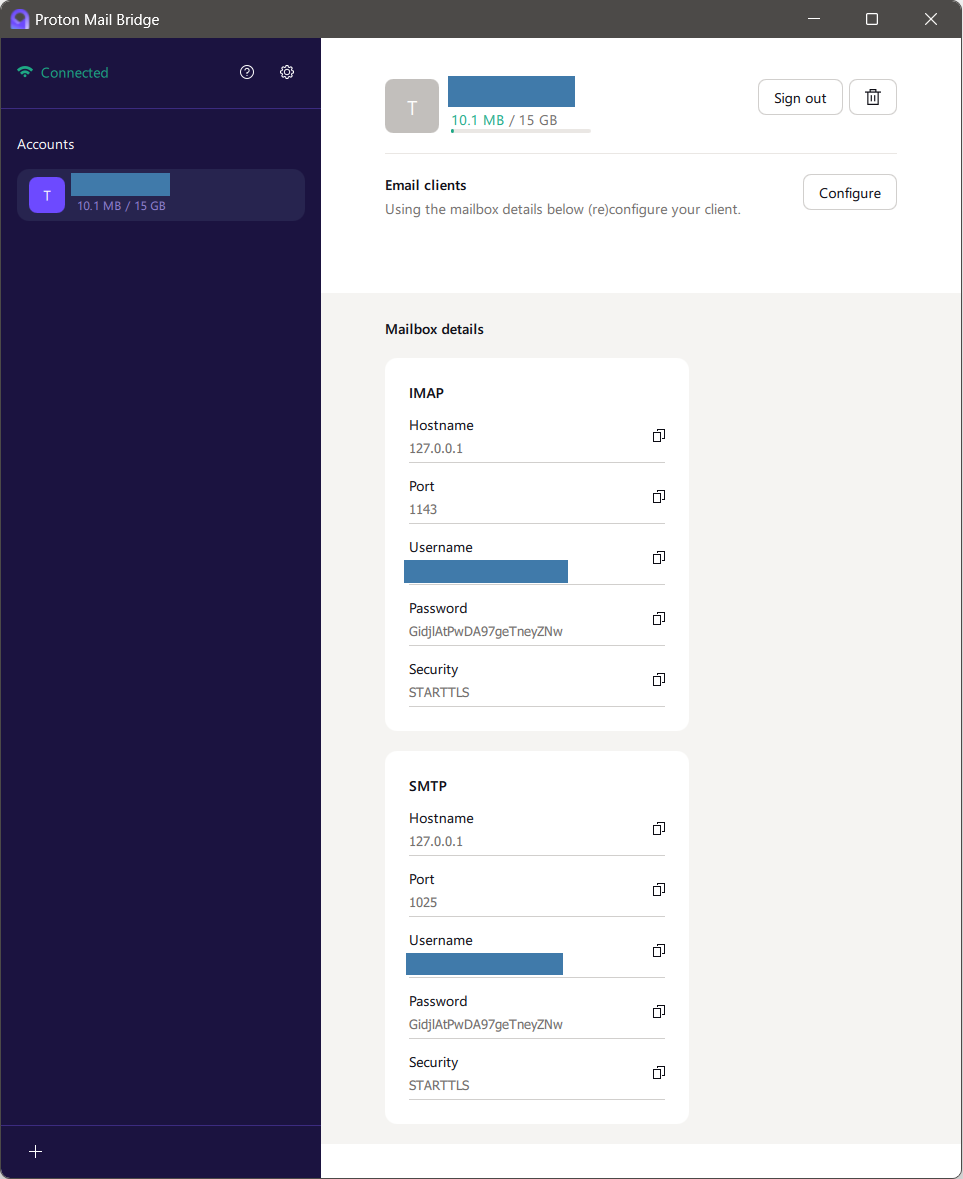
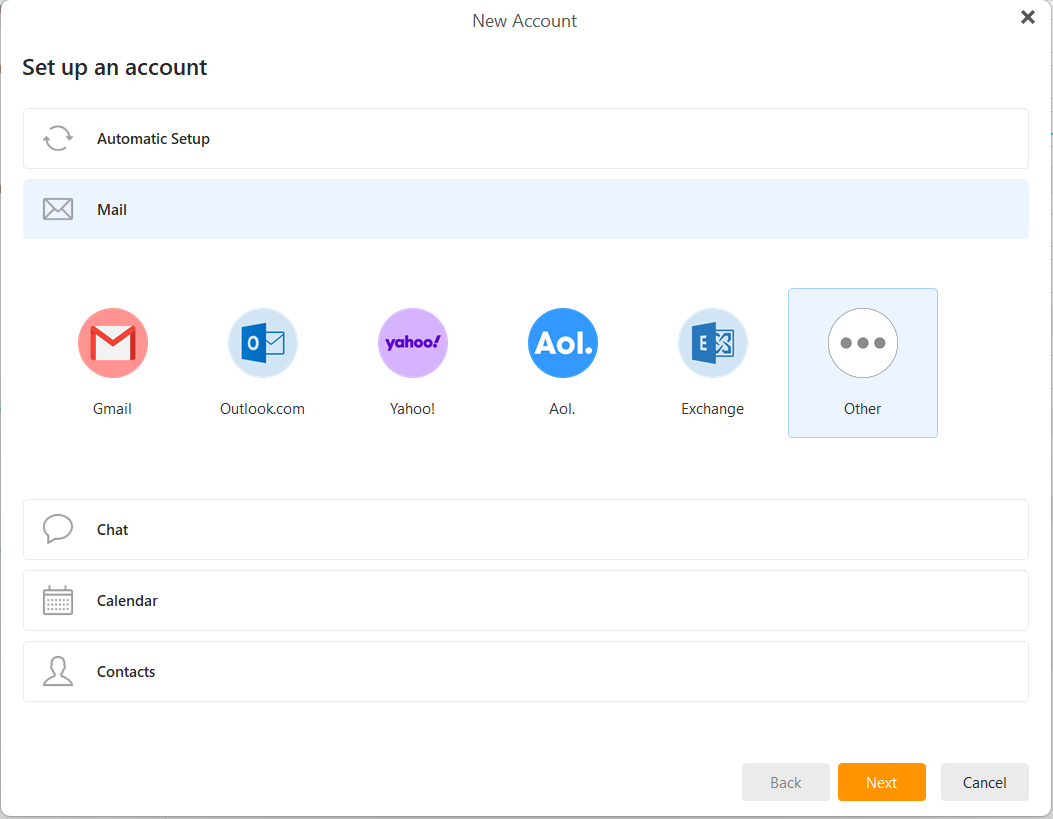
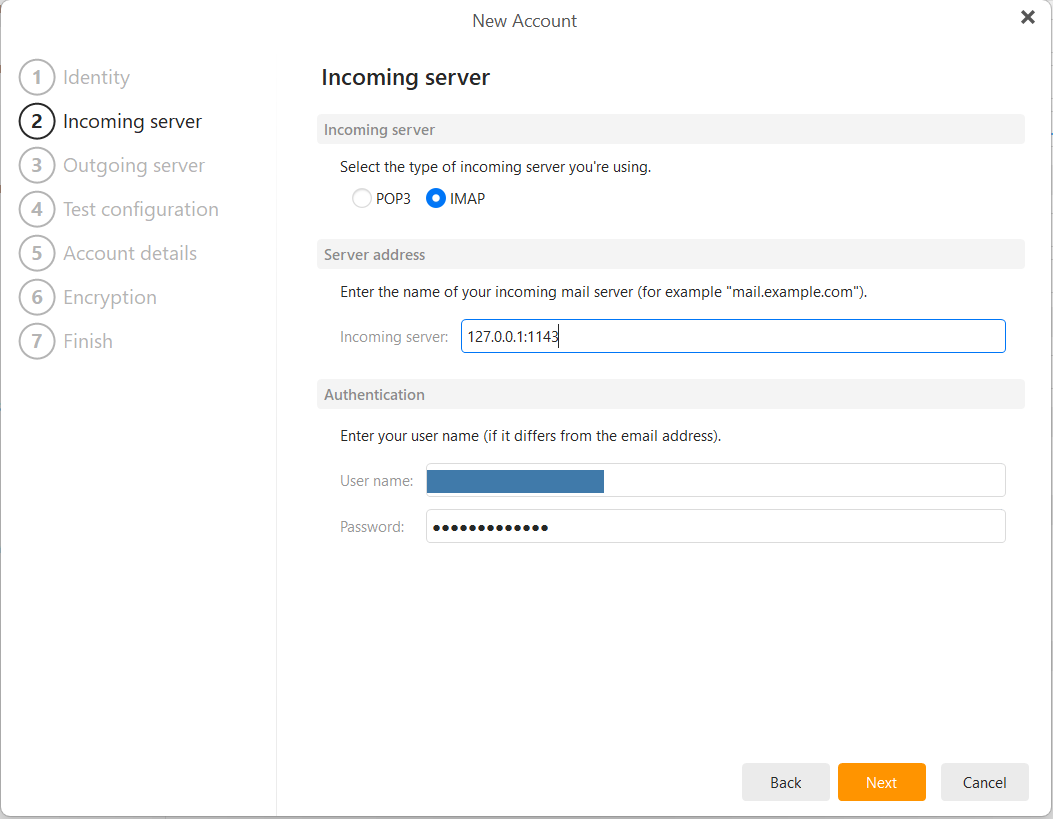
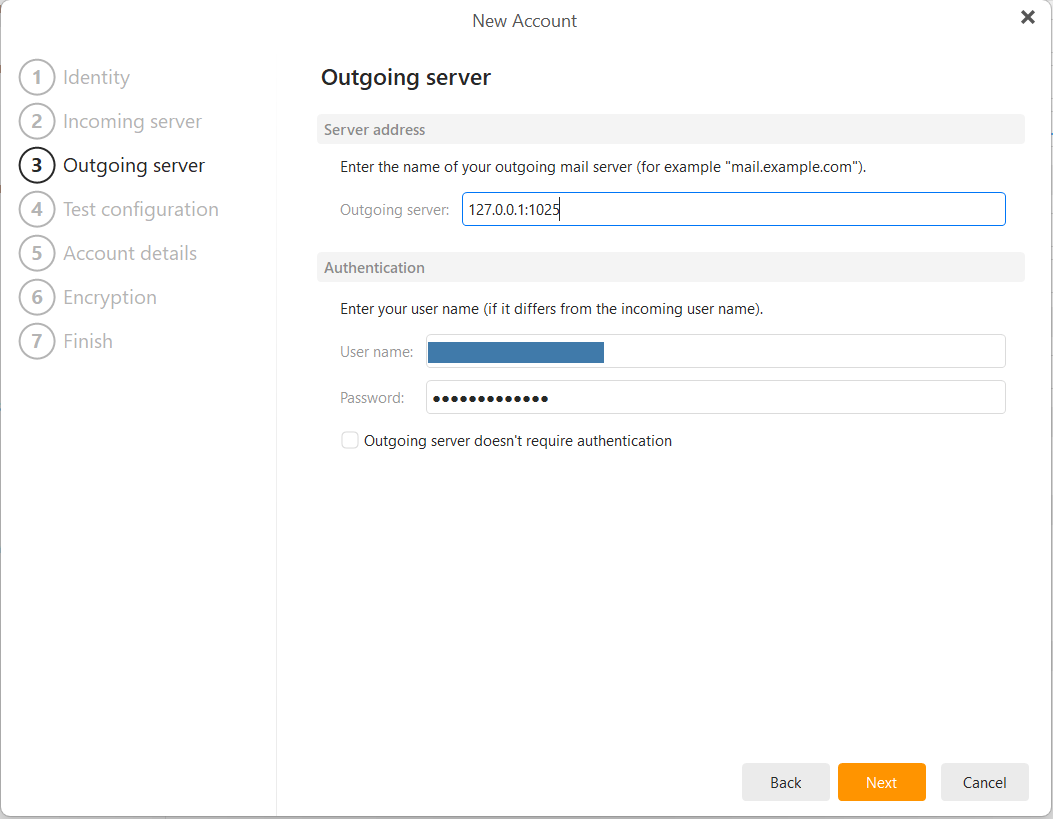
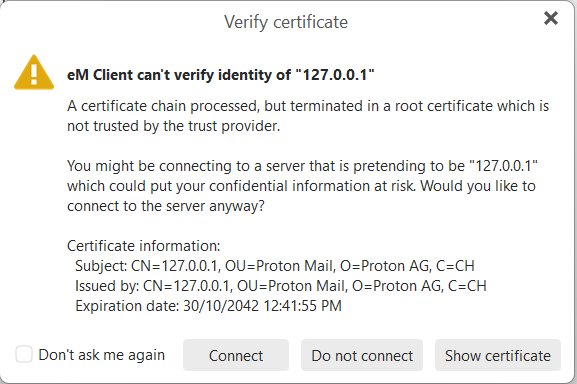
You may get this certificate warning, just choose don’t ask again and connect. You will need to do it twice.
That is all there is to it.
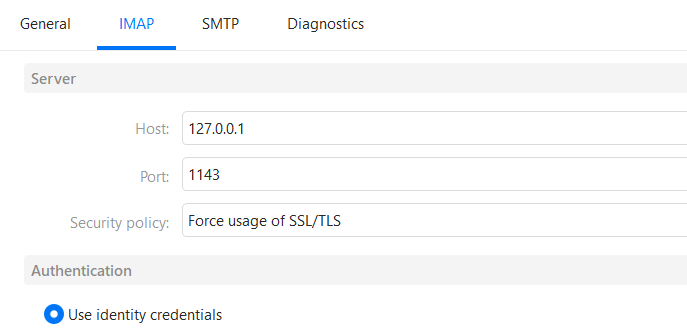
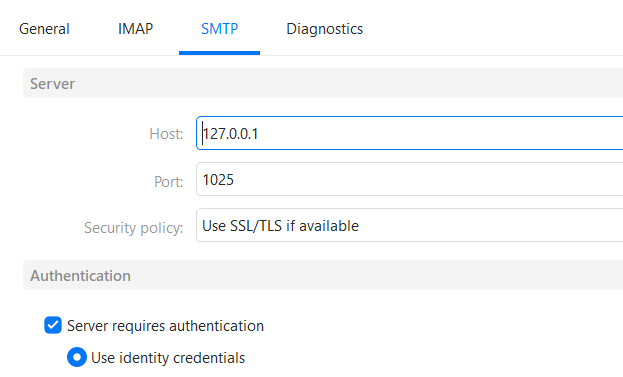
In eM Client Accounts, it will look like this:
For IMAP
For SMTP
Please note that you can only use paid Protonmail accounts with the Bridge. Users with fee Protonmail accounts can’t use their address with email applications. They need to use the webmail page instead.
Thanks for sharing this step-by-step guide. It worked for me. Please update the title from “Ptotonmail Bridge Setup” to “Protonmail Bridge Setup” (my only comment).
The issue now is, when I setup my ProtonMail on eM Client, which credentials do I use? The “littlevatican.com” login used to login into ProtonMail or the original ProtonMail login information?
The reason I ask is because in the Proton Mail Bridge it uses my “littlevatican.com” credentials.
I only ask because when I use my “littlevatican.com” login information, all of my emails are duplicated in eM Client.
I have a frustrating situation where this process worked well on my Mac laptop but not on my Mac desktop (both running Sequoia 15.3.2). despite repeated tries, including deleting the account and reinstalling Proton Bridge, I get a "server not responding’ message for the SMTP server. Any suggestions?
You don’t mention what to do on the Encryption Step. I had to ask Brave.AI:
I am trying to set up eM Client to work with Proton Bridge. The instructions on the eM Client web site ends at step 5 (account details). I am at Step 6 (Set up Additional encryption (E2EE), and I have no clue if I want to set it up. I have a basic idea what E2EE is, but I don’t understand it in the context of eM Client + Proton Bridge + Proton encrypted mail.
Skipped eM Client PGP setup as Proton Bridge handles encryption
You can safely click “Continue without PGP encryption.” Proton Bridge already handles all end-to-end encryption for your Proton Mail account transparently — it decrypts incoming messages and encrypts outgoing ones using your Proton PGP keys before they ever reach eM Client. By the time eM Client sees a message, it’s already decrypted (or Bridge will encrypt it on send).
The “Set up additional encryption” step in eM Client is for eM Client’s own separate PGP system — a different keypair managed by eM Client itself. It’s a redundant, independent encryption layer that does not integrate with Proton Bridge’s encryption. Setting it up would just create confusion with a second, unused keypair.
Hey @MisterFuzzyGuy, that is why the step is intentionally called “additional encryption” - it is an optional step that is part of every account setup in our app that adds another layer for security, if it’s redundant for you, then you can skip it - that is why the option to ““Continue without PGP encryption.” is there.
The guide does not tell you what to do with it because anyone can decide on their own
When I was presented with that “Additional Encryption” page I panicked. It really deserves mention in the above instructions. When I was presented with it, I had no idea if adding it was needed, or even a good idea. I should not have had to waste an AI search to answer question.
According to the AI search, there is no point to add the encryption, since the Proton Bridge is taking care of encrypting / decrypting all traffic over the internet. Adding encryption is at best redundant, and may cause performance issues.
When I saw no description of the step, I panicked. I assumed that the guide was out of date. A simple description that states it is recommended that you don’t need to add this encryption when using Proton Bridge. I think most people encountering an undocumented step is likely to cause panic, and an assumption the guide is out of date.